
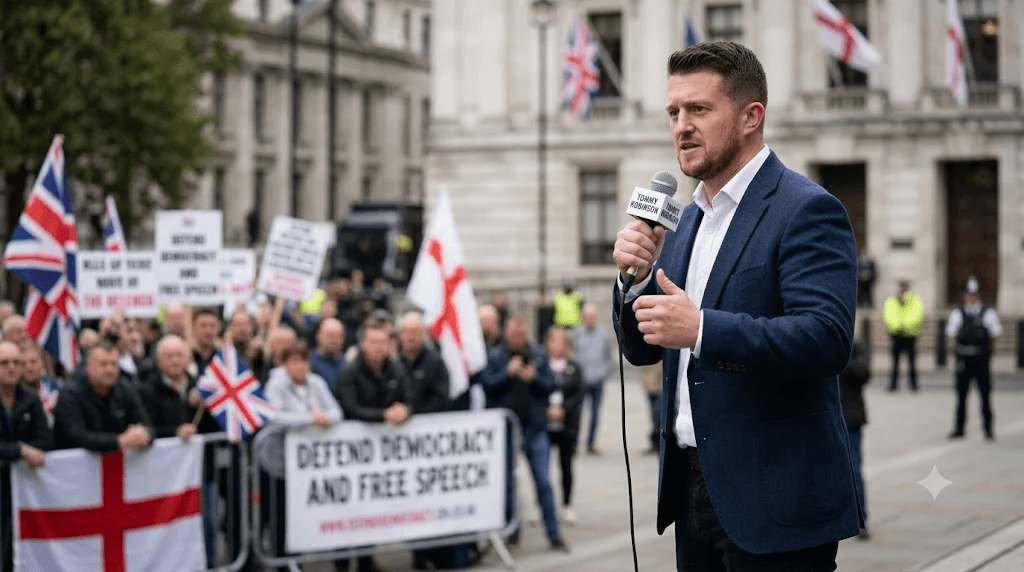
Few modern British figures stir as much debate as Tommy Robinson. Supporters call him a fearless truth-teller. Critics label him a dangerous agitator. The media coverage swings wildly between admiration and condemnation. This article cuts through the noise. You’ll find a factual, balanced account of his life, beliefs, financial standing, and the events that shaped his public persona.
I’ve spent hours researching court records, verified interviews, and credible news reports to build this profile. No fluff. No agenda. Just the key information presented clearly.
Early Life and Family Background
Stephen Christopher Yaxley-Lennon came into the world on November 27, 1982, in Luton, Bedfordshire. His parents were Irish immigrants who worked ordinary jobs—his father in a factory, his mother as a baker. Money was tight. The family lived in a working-class neighborhood where different communities mixed, sometimes uneasily.
Luton during the 1980s and 1990s experienced rapid demographic changes. Young Stephen attended local schools but struggled academically. He left formal education without qualifications and trained as an aircraft engineer at Luton Airport. That career path didn’t last. The streets offered different lessons.
Friends from that period describe him as quick-tempered but fiercely loyal. He got into fights. He made mistakes. Those early experiences would later fuel his political awakening.
The Name Change: Why Stephen Yaxley-Lennon Became Tommy Robinson
The decision to adopt a new identity wasn’t random. In the mid-2000s, Stephen Yaxley-Lennon started moving in football casual circles. He took the name “Tommy Robinson” from a well-known Luton Town FC hooligan from the 1980s. The original Tommy Robinson led the MIGs (Men in Gear), a notorious football firm.
By borrowing this name, the young Yaxley-Lennon tapped into a subculture built on loyalty, territory, and physical confrontation. The name carried weight on the terraces. It signaled belonging.
This choice matters because it reveals something about his approach to identity. He understood early that names carry power. The Tommy Robinson brand would later become far bigger than Luton’s football scene.
The Founding of the English Defence League
2009 marked a turning point. In Luton, a small group called Al-Muhajiroun staged a protest against returning British soldiers from Iraq. The sight of demonstrators shouting abuse at paratroopers outraged many locals, including Yaxley-Lennon.
He responded by helping form the English Defence League. The EDL presented itself as a single-issue movement opposing militant Islamism in Britain. Street demonstrations became their signature tactic. Thousands attended rallies across the country. The group attracted football casuals, concerned citizens, and some far-right elements.
The EDL’s rise split opinion. Supporters praised them for speaking about issues mainstream politicians avoided. Opponents pointed to violence at demonstrations and the presence of extremist symbols. By 2013, Yaxley-Lennon stepped away from formal leadership, claiming the movement had been infiltrated by dangerous extremists he couldn’t control.
Legal Troubles and Prison Sentences
Tommy Robinson’s encounters with the law span more than a decade. Understanding this pattern helps explain both his notoriety and his following.
2005: Assault conviction. He received a prison sentence for attacking an off-duty police officer. This marked his first serious brush with the justice system.
2011: Football banning order. After incidents at matches, authorities barred him from attending games. The order reflected his continuing involvement in hooligan subcultures.
2014: Mortgage fraud. Using false documents to obtain a loan landed him in prison again. He served several months before release.
2018: Contempt of court. While reporting outside Leeds Crown Court during a grooming gang trial, he broadcast information that potentially prejudiced proceedings. The judge imposed a prison sentence. This became his most controversial legal battle, with supporters claiming free speech persecution and legal experts pointing to contempt laws that apply equally to all citizens.
2021-2024: Multiple arrests related to protest activities, COVID-19 lockdown violations, and ongoing legal disputes. Each case attracted significant media coverage.
The cumulative effect of these cases created a complex legal profile. Courts have imposed strict orders limiting his activities, yet he continues to operate publicly.
Political Activities and Ideological Stance
Robinson describes himself as a journalist and human rights campaigner. His political positions defy easy categorization.
He claims to defend Western liberal values against what he sees as threats from radical Islam. He advocates for stricter immigration controls, tougher law enforcement, and cultural integration. He criticizes mainstream politicians from both left and right for ignoring what he calls the “voice of ordinary people.”
Former associates describe his views as nationalist and anti-establishment. He has addressed far-right rallies in Europe. He has met with controversial American activists and politicians. These connections fuel debates about whether he’s a legitimate commentator or something more extreme.
Key political moments include:
- Addressing thousands at a 2018 “Free Tommy” rally in London
- Establishing a significant online following after being banned from mainstream social platforms
- European Parliament appearances that generated heated public debate
- Regular commentary on grooming gang scandals that mainstream media initially underreported
Tommy Robinson Net Worth and Income Sources
The question “tommy robinson net worth” generates significant search interest. Reliable figures are difficult to verify because his financial arrangements remain largely private. However, we can examine known income streams.
Estimated net worth range: Reports place it between £500,000 and £2 million, however any estimate would be speculative given the lack of access to private accounts. Some sources estimate lower, others claim higher. In the middle is where the truth lies.
Primary income sources:
- Crowdfunding: Multiple online campaigns have raised substantial sums for legal fees and living costs. Some campaigns reportedly generated hundreds of thousands of pounds.
- Book sales: He has authored books about his experiences. Sales provide royalty income.
- Speaking engagements: Public appearances at events generate fees.
- Social media monetization: Despite platform bans, he maintains a presence on alternative platforms with subscription options.
- Merchandise: Branded clothing and materials sold to supporters.
What’s clear is that his controversial status has created a loyal base willing to fund his activities. Critics argue the income relies on stoking division. Supporters see voluntary donations as evidence of genuine grassroots backing
Complete Biography Table
| Category | Details |
| Full Legal Name | Stephen Christopher Yaxley-Lennon |
| Known As | Tommy Robinson |
| Date of Birth | November 27, 1982 |
| Place of Birth | Luton, Bedfordshire, England |
| Age (2026) | 43 years |
| Nationality | British |
| Ethnic Background | Irish descent |
| Height | Approximately 5’8″ (173 cm) |
| Education | Left school without formal qualifications |
| Early Career | Trained as aircraft engineer; worked briefly at Luton Airport |
| Notable Organization | Co-founder of the English Defence League (2009) |
| Current Occupation | Activist, author, online commentator |
| Marital Status | Married (multiple marriages reported) |
| Children | Has children (exact number kept private) |
| Criminal Record | Multiple convictions including assault, fraud, and contempt of court |
| Estimated Net Worth | Approximately £500,000 – £2 million (unverified) |
| Books Authored | Multiple titles detailing his experiences and political views |
| Political Affiliation | Independent; associated with anti-Islam and nationalist movements |
| Social Media Status | Banned from major platforms; active on alternative platforms |
| Notable Legal Case | Contempt of court conviction, 2018 |
| Residence | United Kingdom |
Media Coverage and Public Perception
British newspapers have devoted thousands of column inches to Robinson. The coverage splits along predictable lines.
His statements regarding grooming gangs have occasionally been sympathetically published by tabloids like The Sun and Daily Mail. Broadsheets like The Guardian and The Independent tend toward critical examination of his methods and associations.
Television appearances remain rare. Mainstream broadcasters typically avoid platforming him, citing editorial guidelines about hate speech and community standards. This exclusion feeds his narrative about media censorship.
Online, the picture shifts dramatically. His supporters circulate videos and articles that reach millions. Alternative platforms amplify his message even when mainstream channels block it. Understanding Tommy Robinson requires acknowledging these parallel media ecosystems.
The Grooming Gang Connection
Much of Robinson’s prominence stems from his reporting on child sexual exploitation cases in British towns. These cases involve predominantly men of Pakistani heritage abusing vulnerable white girls.
His documentaries and reports highlighted cases in Rotherham, Rochdale, Telford, and elsewhere. He documented victim testimonies and accused authorities of covering up crimes to avoid accusations of racism.
Independent inquiries later confirmed systemic failures by police and social services. The evidence showed that some officials feared being labeled Islamophobic and failed to protect children as a result. Robinson claims vindication. Critics note that his reporting methods sometimes breached court orders protecting victims’ anonymity.
This issue remains deeply sensitive. Victims deserve justice. Communities deserve honest conversations. The line between legitimate investigative journalism and harmful sensationalism is one Robinson has crossed in both directions, depending on the case and moment.
International Connections and Influence
Robinson’s reach extends beyond Britain. He has built relationships with figures across Europe and North America who share his concerns about Islam and immigration.
In the United States, his case attracted attention from right-wing commentators and political figures. Some conservative activists portrayed his legal troubles as evidence of free speech under threat in Europe. This American interest significantly boosted his international profile.
In Europe, he has addressed nationalist groups, particularly in Germany and the Netherlands. These appearances worry anti-extremism watchdogs who monitor transnational far-right networks.
The international dimension matters because it transformed a domestic British activist into a global symbol for certain movements. Whether he sought this status or it found him remains debated.
Controversies and Ongoing Debates
Honest discussions about Tommy Robinson require acknowledging difficult facts.
Criminal violence: His conviction for assaulting an off-duty police officer remains part of his record. No amount of political activism erases that.
Financial transparency: Critics question whether donated funds always serve their stated purposes. There are audits and reports, according to his supporters.
Associations: He has shared platforms with individuals holding genuinely extreme views. Whether this represents strategic alliance or ideological alignment depends on perspective.
Journalistic methods: Credible journalists follow ethical guidelines about accuracy, fairness, and minimizing harm. Robinson’s methods sometimes violate these principles, even when his underlying concerns prove legitimate.
What’s certain is that Tommy Robinson remains a figure of intense public interest. People want to understand him, whether they agree with him or not. This article aims to provide information, not advocacy.
Personal Life and Present Circumstances
Robinson guards his family life carefully. He has been married multiple times. He has children whose privacy he attempts to protect, though press attention sometimes intrudes.
He currently lives in the United Kingdom and continues producing online content. Legal restrictions impact his activities but haven’t silenced him entirely. His daily life involves managing a small team that handles media, legal affairs, and supporter communications.
Those who know him personally describe a man who thrives on conflict but struggles with the pressure of constant public scrutiny. The psychological toll of prison stays, death threats, and intense media attention shapes his worldview in ways visible in his content.
Conclusion: Understanding Tommy Robinson Beyond the Headlines
Tommy Robinson is not an easy subject to summarize. His supporters see a courageous man punished for speaking unpalatable truths. His detractors see a convicted criminal exploiting social divisions for profit and fame.
The evidence supports elements of both interpretations. He has highlighted genuine institutional failures around child sexual exploitation. He has also broken laws and associated with genuinely dangerous ideologues.
What readers should take from this profile is nuance. The world doesn’t fit neatly into hero-and-villain categories. People contain contradictions. Tommy Robinson embodies more contradictions than most.
If this article helped you understand the topic better, share it with someone who could benefit. Leave a comment with your perspective—respectful debate improves understanding. And check our related articles for deeper dives into the social and political forces shaping modern Britain
FAQ Section
Who exactly is Tommy Robinson?
Tommy Robinson is the public name of Stephen Christopher Yaxley-Lennon, a British activist born in Luton in 1982. He co-founded the English Defence League in 2009 and later became known for independent media work focusing on Islam, immigration, and child sexual exploitation cases in the UK. His legal troubles and political positions have made him one of Britain’s most controversial modern figures.
What is Tommy Robinson’s real name?
His legal birth name is Stephen Christopher Yaxley-Lennon. He changed it informally in the mid-2000s, adopting “Tommy Robinson” from a former Luton Town FC hooligan. The name stuck and became his public identity. Government records still list his original name for official purposes.
What is Tommy Robinson net worth?
His estimated net worth falls somewhere between £500,000 and £2 million based on available information about donations, book sales, and speaking fees. Exact figures remain unverified because his accounts are private. Income primarily comes from supporter contributions, merchandise, and media projects.
Why did Tommy Robinson go to prison?
Robinson has served multiple prison sentences. The offenses include mortgage fraud in 2014, assaulting a police officer in 2005, and contempt of court in 2018 after filming outside a trial and disclosing information that couldhave prejudiced proceedings. Additional arrests have occurred for protest-related activities.
What is the English Defence League?
The EDL was a street protest movement founded in 2009 that claimed to oppose militant Islamism in Britain. It organized large demonstrations across the country. Critics accused it of racism and inciting violence. Robinson left formal leadership in 2013 but remains associated with the movement’s origins.
Is Tommy Robinson still active today?
Yes, he continues producing online content and commenting on political issues despite legal restrictions and platform bans. He maintains a presence on alternative social media platforms and communicates directly with supporters through his own channels. His current activity level remains significant.